In a room full of business leaders, the day asked a harder question than how to grow.

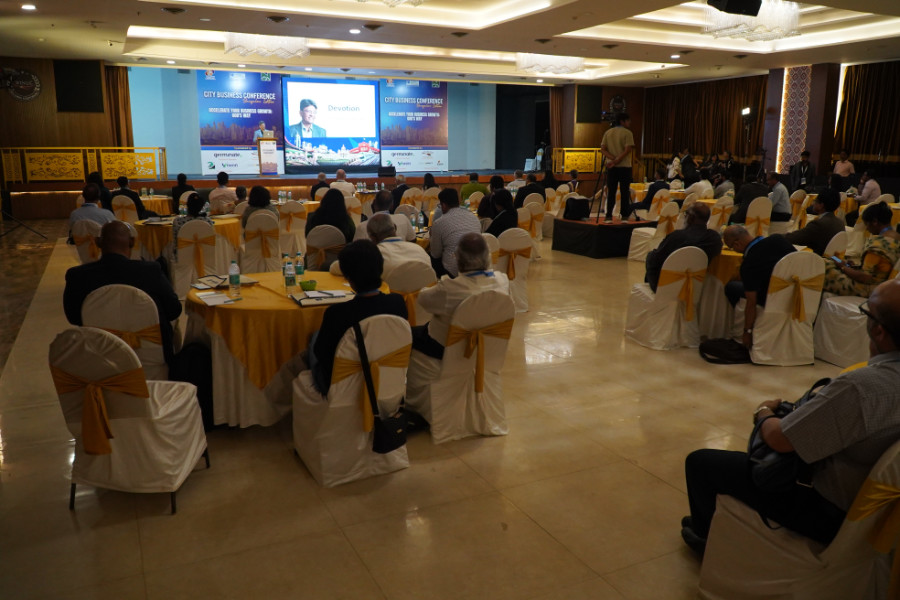
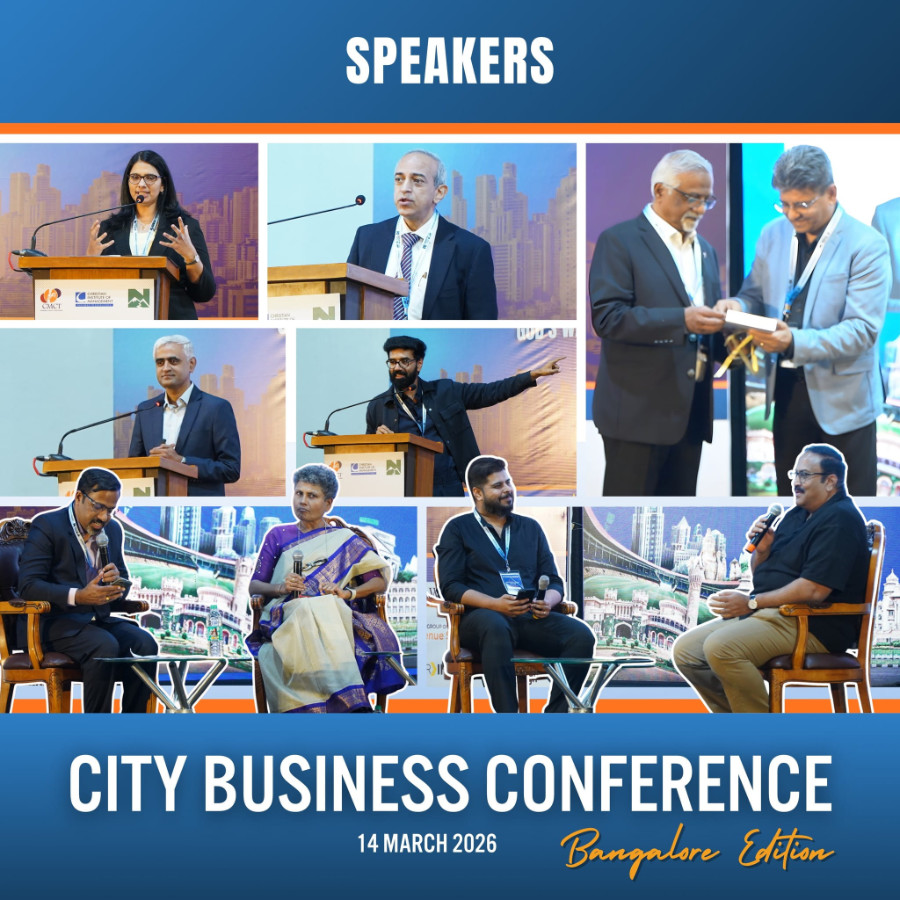
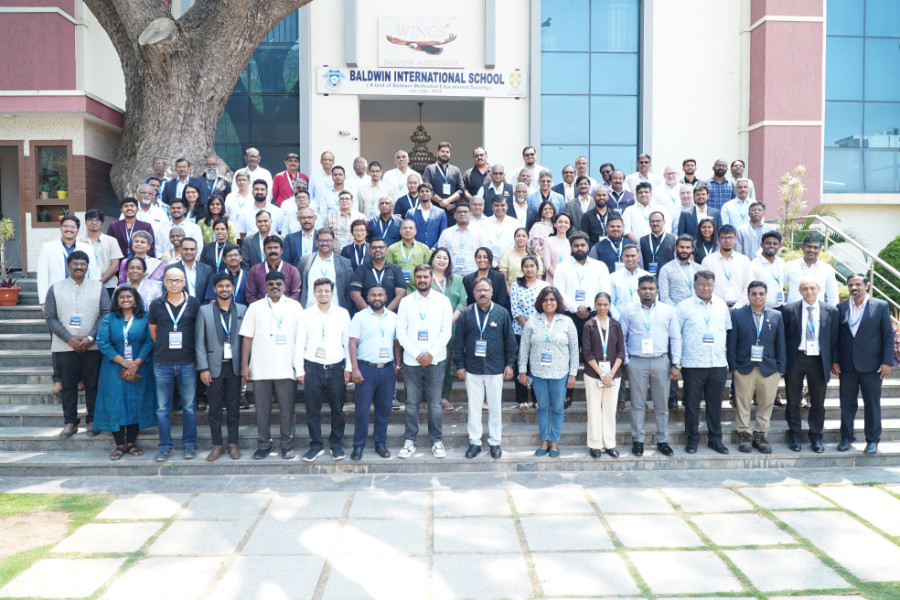
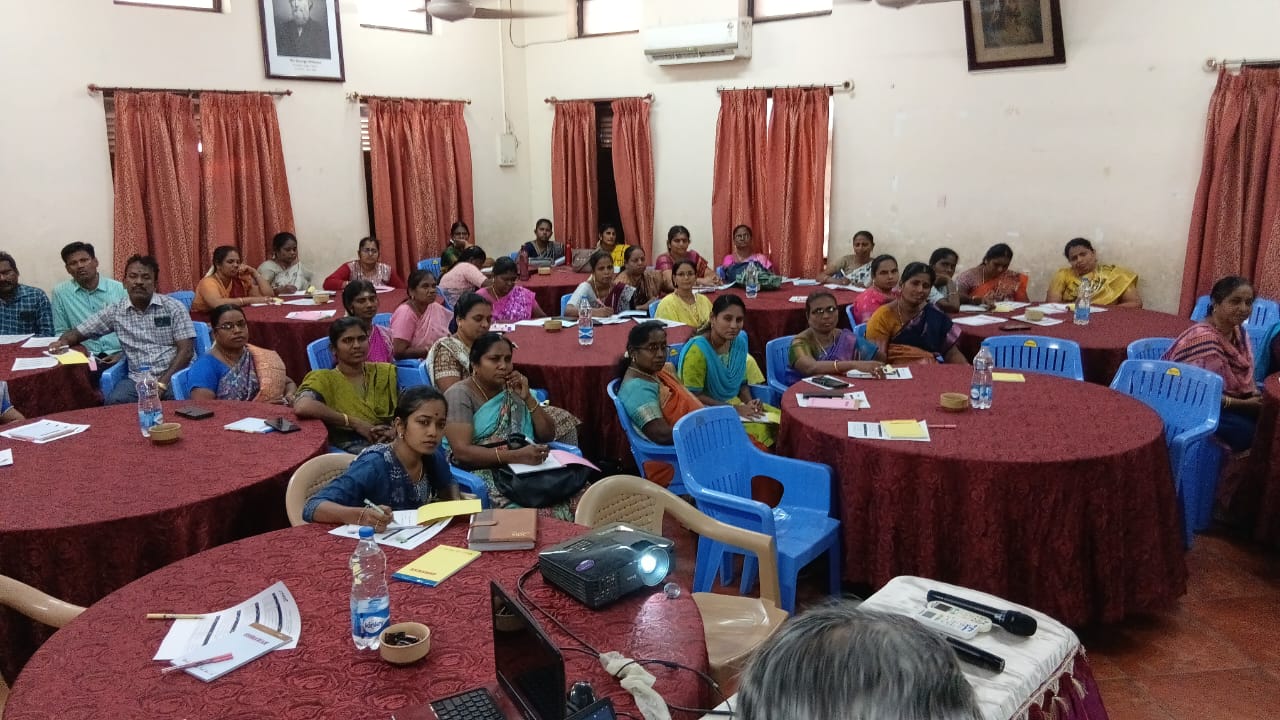
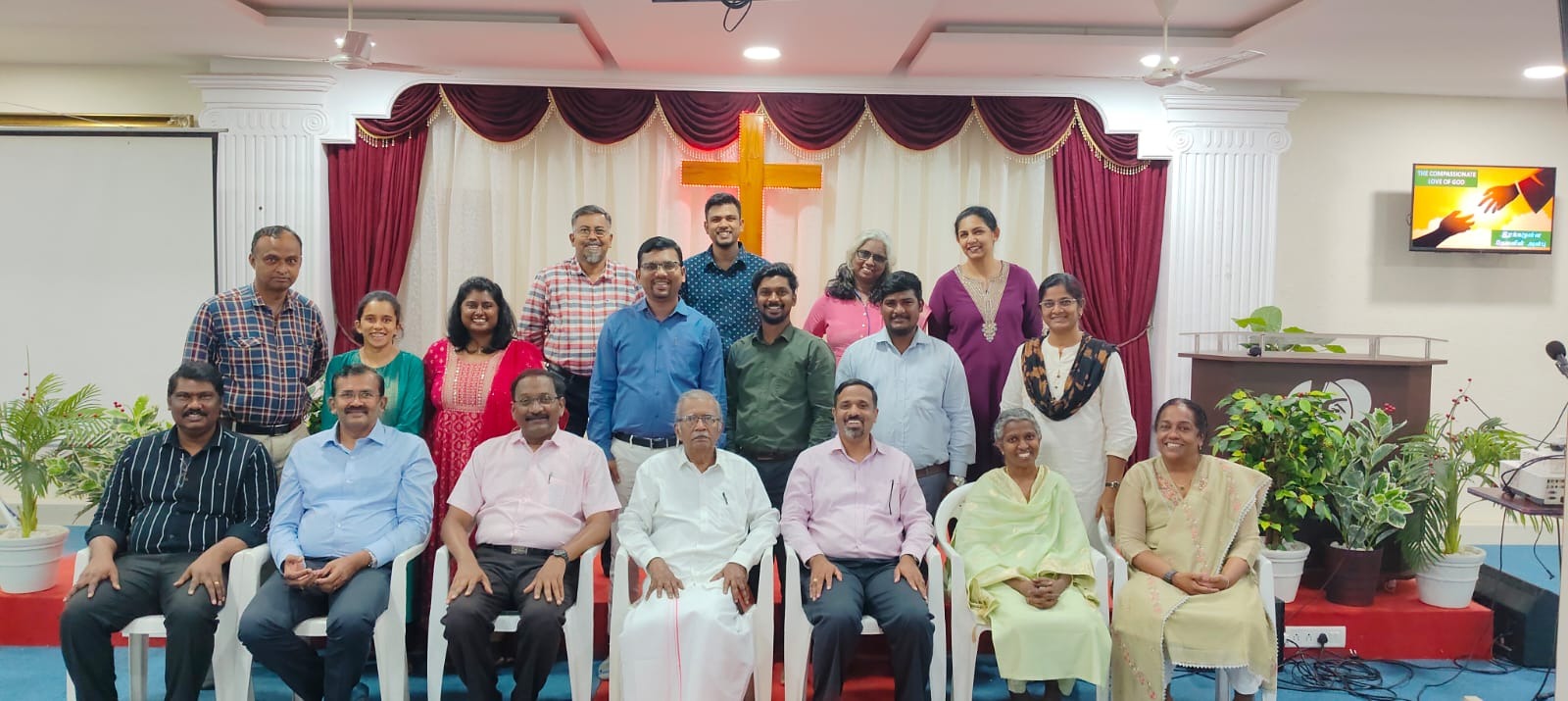
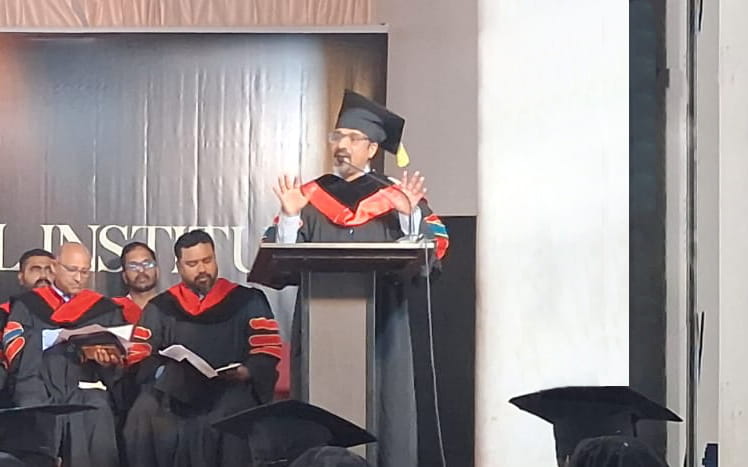
On 14 March 2026, the City Business Conference (CBC) 2026 gathered business owners, entrepreneurs, and professionals at Wings Baldwin Auditorium, Bengaluru. Jointly hosted by CIM, NEBO and CMCT, the day-long conference, themed “Accelerate Your Business Growth: God’s Way,” was a working conversation about whether business growth and the deeper questions of purpose, integrity, and generosity can truly hold together.
Mino Thomas of Adobe offered the image that framed the day. Centuries ago, he said, the tallest building in a city was the cathedral. Today it is the business tower. Faith-driven voices shaped the printing press but have been largely absent from the industrial revolution, the internet boom, and now AI.
His question to the room was clarifying. Are values-led leaders on the crown, or on the scaffold?
His challenge was practical. Before operationalising AI, write your moral code first. Keep a human in the loop for consequential decisions. Human on the loop for governance. Human out of the loop only for the automatable. The framework was simple. The stakes behind it were not.
Success celebrates you. But it is failure that shapes you. Failure is not the opposite of success. It is the training ground for it.
Ten Voices. One Uncomfortable Question.
Mr. Samir Deokuliar opened with a leadership lesson drawn from Peter. The disciple who sank, who was rebuked, who denied his teacher three times, and who went on to become one of the Christian movement’s most effective leaders. Setbacks, Samir argued, do not disqualify those who have been called. Success celebrates a leader. Failure shapes one. For a room full of entrepreneurs running businesses under real pressure, it was permission to keep going.
Prof. Ashok Thampy of IIM Bangalore followed with the numbers. India is on track to become the third largest economy in the world by 2030, adding over one trillion dollars of GDP in five years. Per capita income is about to cross the 3,000 dollar threshold, where demand for premium goods accelerates.
His question: How much of that one trillion is coming to you? Narayana Health and Zomato, his case studies, showed the pattern. Growth usually lies in adjacent spaces, not in unrelated diversification. Kingfisher Airlines, he reminded the room, is what happens when you mistake the two.
Don’t despise small beginnings. Every business that is big today started small.
Dr. Robin Paul turned strategy into posture. If you want to accelerate your business God’s way, he said, your business has to be prophetic and profitable. Drawing on Isaiah 54:2, he challenged leaders to enlarge their tent, stretch their curtains, strengthen their stakes. A business built only on capital has a ceiling. A business built on God’s promises has a different source. At Breakthrough, his sales team walks into meetings two by two. One pitches, one prays. When God gives you a promise, he added, his provision comes with it.
Prophetic and profitable. If you want to accelerate your business God’s way, it has to be both.
The session most referenced later was Caleb Allan’s interview with Anand Mathews, whose company is now valued at over 100 million dollars. Anand called himself an accidental businessman.
His stories were specific and unvarnished: the morning his office was sealed over a software dispute and the Switzerland order that funded its release that same night; the police officer who offered to make an employee case disappear for ten lakh rupees, and his decision to let it run through the courts for seven years instead.
His framework was a five-word sequence. Prayer. Purpose. Process. Profit. Promise.
You build the process with the rigour any secular business would. Only then does the promise unfold.
The Word comes before the world. That is the one thing I would tell myself twenty-five years ago.
The afternoon panel, moderated by Dr. Aby Alexandar, went further. Manju George was direct: cash flow, not profit, is what you track daily. Compliance is not optional. And the greater danger for a growing business is not failure, but falling in love with money. The defence against that is the practised discipline of giving.
Santosh Joseph closed with the Germinate Investor Services story. He started in 2016. The second month brought demonetisation. GST, RERA, and COVID followed. The firm now manages over 1,500 crore rupees in assets.
He still describes his qualification the same way he did in the early years. PhD: Poor, Hungry, Determined. The story, he said plainly, is only half written.
Lincy Iype’s contribution carried a different weight. Fourteen years into building Mustard Cafe and Ministries, the cafés continue to run. Alongside this, an education curriculum now used in schools has taken shape, a retail store named after the child she lost has emerged, and a wider body of community work has grown. Her framing held two ideas together: readiness and action cannot be separated. If Joseph had been interviewed in his thirteenth year, she reminded the room, it would not have looked like a success story either. Not every growth story looks like growth while it is being lived.
Five Lessons. Take One Back to Monday.
-
1You are not disqualified.
God does not disqualify those he has called, even when they sink. Leaders who internalise this lead with greater courage, not less accountability.
-
2Grow sideways before you grow wide.
The most dangerous quadrant is the one where you have neither customer nor competence. Move into spaces that build on what you already know.
-
3Prayer, purpose, process, profit, promise.
The rigour of process is not optional because you are a believer. It is the expression of it. Prayer sets the direction. Process earns the right to grow.
-
4Watch the cash. Watch the heart even harder.
Profitability on paper is not cash on hand. And the greater danger than either is falling in love with money. The discipline of giving is how leaders stay free.
-
5The Word before the world.
Values-led voices have been largely absent from the shaping of the last three industrial revolutions. AI is the one in front of us. The invitation is to write a moral code, not just adopt the technology.
The Room That Made It Happen
| Mr. Samir Deokuliar | Author and leadership consultant. Opened the day with the leadership keynote |
| Prof. Ashok Thampy | Professor of Finance, IIM Bangalore. Keynote on the Indian growth opportunity |
| Dr. Robin Paul | CEO & Founder, Breakthrough. Organisation Growth Acceleration Process |
| Mr. Anand Mathews | MD, Global Tech & BPO. Interviewed on overcoming growth challenges |
| Mr. Caleb Allan | Founder, Armour India. Interview moderator and marketplace strategist |
| CA Manju George | Partner, R. K. Khanna & Associates. Panel on Scaling, Purpose & Generosity |
| Dr. Aby Alexandar | Executive Director, CIM. Panel moderator |
| Mr. Mino Thomas | Senior Director, Adobe. On Responsible AI and the leader’s moral code |
| Mr. Santosh Joseph | Founder & CEO, Germinate Investor Services. Story of building a wealth firm |
| Mrs. Lincy Iype | Co-founder, Mustard Cafe & Ministries. Story of obedience over scale |
This Isn’t a One-Off. Here’s Why.
CIM brought the City Business Conference to Bengaluru because the business community is not separate from the communities it operates in, and because the tallest buildings in Indian cities are now being built by business leaders. That shift comes with responsibility. The conviction behind CBC is that leaders who build with integrity, generosity, and a clear sense of calling build things that last. This is the third such conference, following Chennai and Delhi. More are planned.
For upcoming CIM events: seminar@cimindia.in | 73581 99374 | www.cimindia.in